
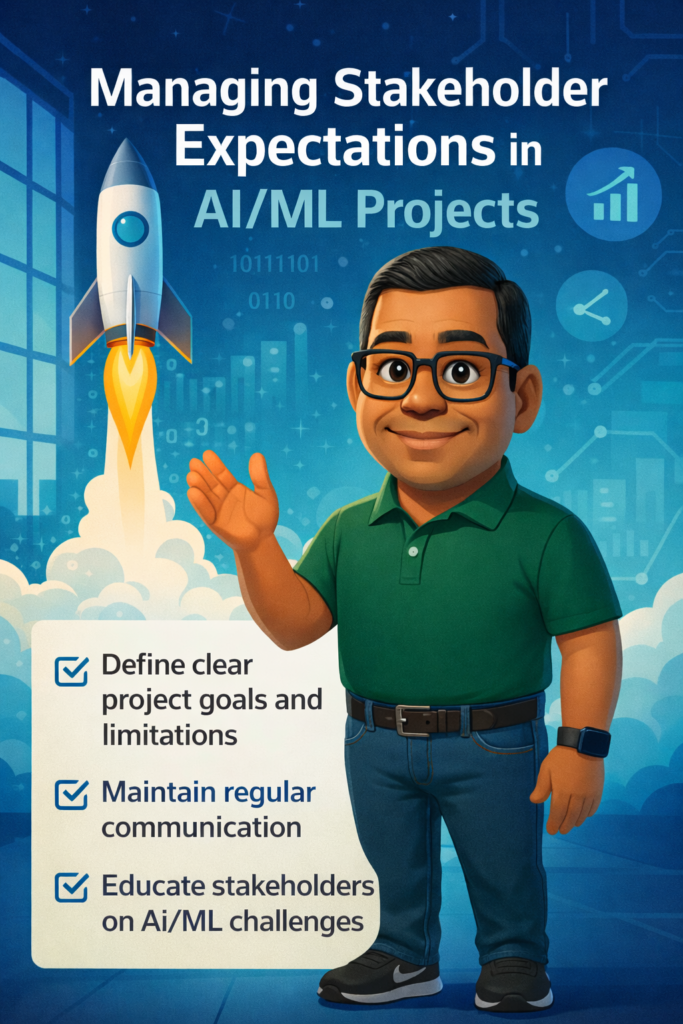
Seven Essential Practices for Meeting Stakeholder Expectations
Artificial Intelligence (AI) projects offer significant business benefits, but managing stakeholder expectations is essential for success. Below are best practices for effective expectation management in AI projects.
Clearly Define Goals and Objectives: Establish clear project goals and objectives before starting. This ensures all stakeholders understand and align with the project’s aims.
Communicate Regularly: Maintain consistent communication with stakeholders. Provide updates on project progress, address concerns promptly, and ensure alignment throughout the project.
Set Realistic Timelines: AI projects are often complex and time-consuming. Set achievable timelines and communicate them clearly to stakeholders.
Be Transparent about Limitations: While AI technology is advancing, it still has limitations. Communicate these openly to manage stakeholder expectations.
Involve Stakeholders Early and Often: Engage stakeholders from the outset to align expectations with project goals. Maintain their involvement throughout to address concerns and ensure satisfaction.
Establish a Feedback Loop: Create a process for stakeholders to provide regular feedback. Ongoing input helps identify and address unmet expectations promptly.
Consider a Pilot Project: Start with a pilot project to test AI technology and manage expectations. This approach confirms the technology’s effectiveness before full-scale implementation.
A project manager’s effort and ability to manage stakeholder expectations are crucial for a successful AI project. By following these seven essential practices, you can ensure that your stakeholders understand the project goals, timelines, and limitations, and that you meet their expectations.