
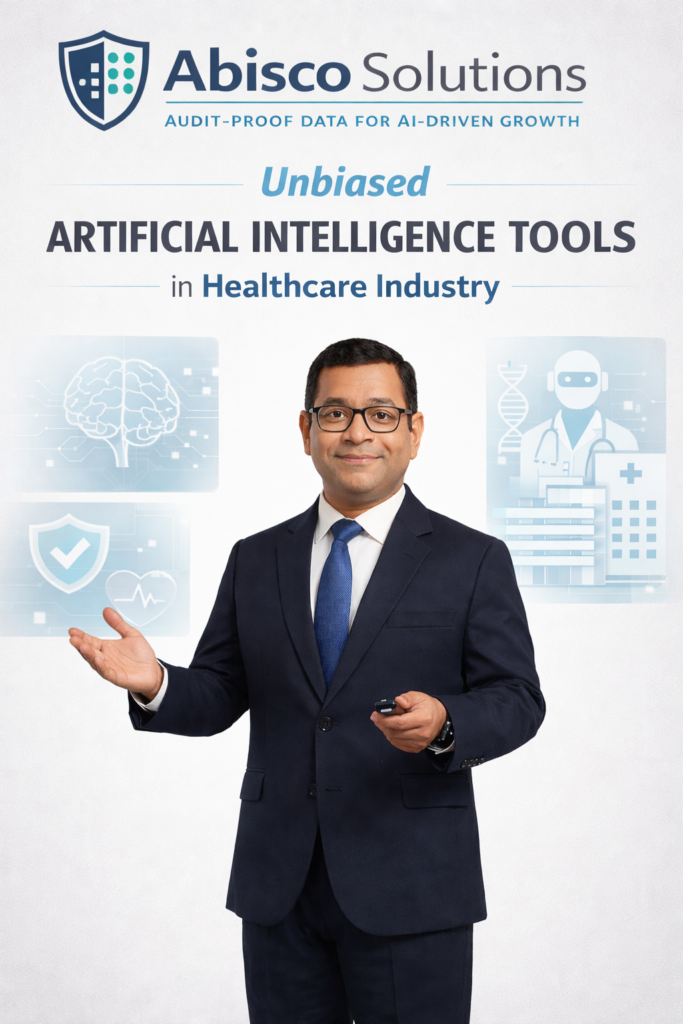
AI tools being used to improve the accuracy and efficiency of medical diagnoses.
Artificial intelligence (AI) is changing the way the healthcare industry operates. The rise of AI in healthcare has opened up a wealth of new possibilities, using AI tools to improve the accuracy and efficiency of medical diagnoses, develop new treatments, and manage medical data more effectively. One of the most exciting developments in the use of AI in healthcare is the emergence of unbiased AI tools, which have the potential to revolutionize how medical care is delivered.
The use of AI in healthcare is not new, but the development of unbiased AI tools is recent. Unbiased AI tools can be designed to remove human biases and prejudices from decision-making, making them more reliable and accurate. Removing biases can profoundly impact healthcare, as human biases and prejudices often lead to poor medical outcomes. For example, “Unequal Treatment: Confronting Racial and Ethnic Disparities in Health Care” by the City University of New York Medical School has shown that women and minorities are often diagnosed later and receive less effective treatments than white men. The gap in therapy stems from unconscious biases in the medical system, which can lead to different outcomes across patient populations.
Unbiased AI tools can help reduce these disparities by providing a more objective and accurate assessment of patients’ medical needs. For example, we can use AI tools to analyze large amounts of medical data to identify patterns and trends, which can help medical professionals to make more informed decisions about treatments. We can also use AI tools to evaluate medical images, such as X-rays or MRIs, to identify abnormalities or diseases. AI tools can help medical professionals diagnose conditions more quickly and accurately, and reduce the risk of misdiagnosis.
In addition to improving the accuracy of medical diagnoses, AI tools can also help to develop new treatments. For example, AI tools can analyze large volumes of genetic data to identify new drug targets. Genetic data research can lead to the development of new drugs that are more effective and have fewer side effects. AI tools can identify new gene-editing targets that medical professionals can use to cure genetic diseases.
Finally, AI tools can manage medical data more effectively. For example, AI tools can help organize and analyze large amounts of medical data, helping medical professionals identify trends and patterns that might be difficult to spot otherwise. AI tools can identify patients at high risk of developing certain conditions, helping medical professionals intervene early and prevent disease onset.
The use of unbiased AI tools in the healthcare industry has the potential to revolutionize the way medical care is delivered. By removing human biases and prejudices from the decision-making process, AI tools can help to improve the accuracy and efficiency of medical diagnoses, develop new treatments, and manage medical data more effectively. As technology evolves, AI tools will likely become an increasingly important part of the healthcare landscape, offering new and exciting possibilities for improving patient outcomes.